

Introduction
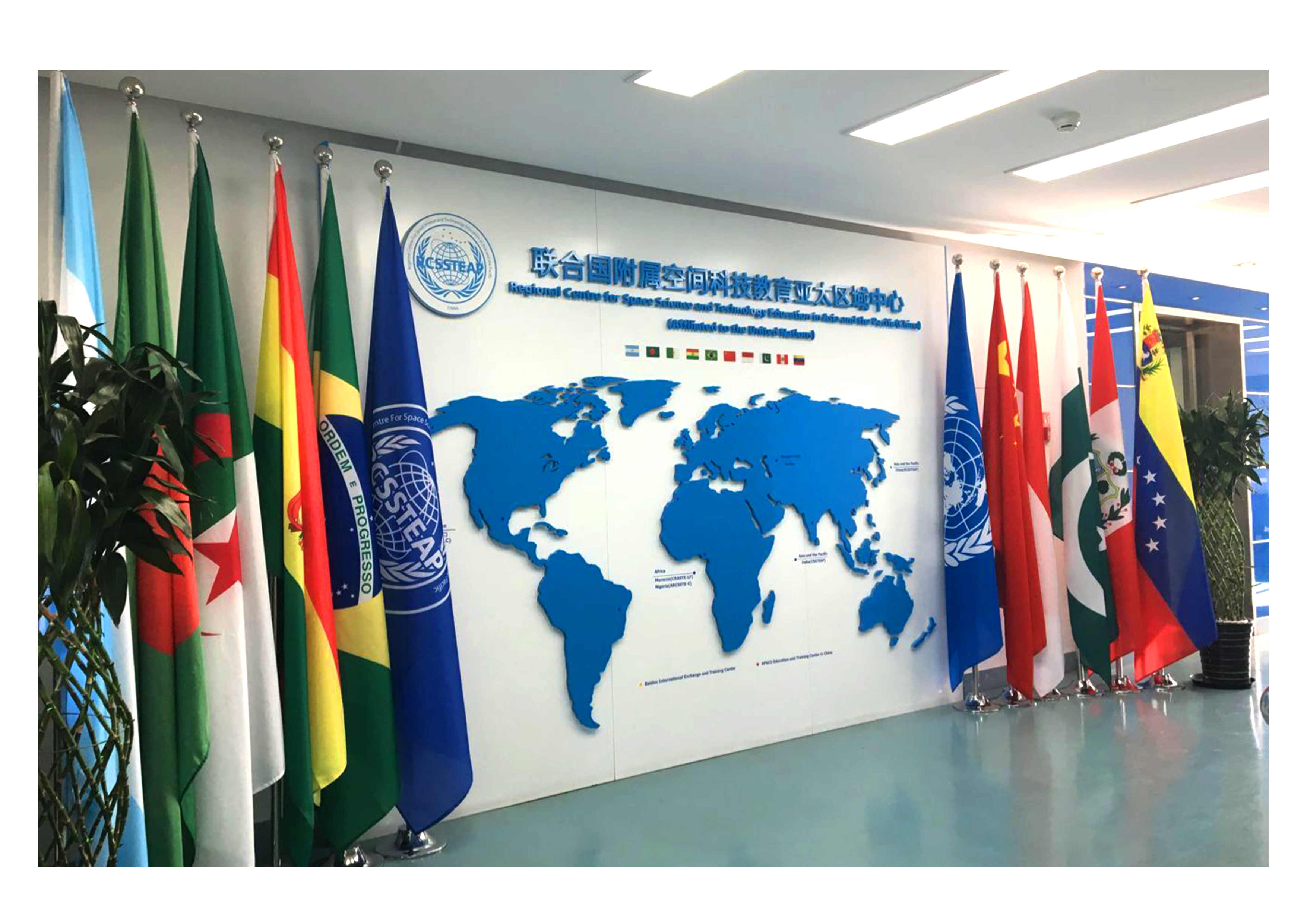
Regional Centre for Space Science and Technology Education in Asia and the Pacific (China) (Affiliated to the United Nations) (RCSSTEAP for short) was established in November 2014. The Centre is located at Beihang University, Beijing, China. The Centre, as an education and training entity supported by the Committee on the Peaceful Uses of Outer Space (COPUOS), seeks to contribute to the implementation of “Programme on Space Applications” promoted by COPUOS and to the enhancement of the education and training level as well as application capacity of space science and technology in the Member States of the Centre through capacity building, information communication, training programmes, etc.
Since its establishment, the Centre has adhered to the concept of “Down to the Earth while Aiming High”, taken “Cultivating high-level, innovative and international talents in space technology applications” as its mission, persisted in the development strategy of “Openness, Innovation and Inclusiveness”, and made unremitting efforts to realize the vision of “Promoting the peaceful use of space technologies for the benefit of all mankind”.
The Director shall take responsibility for the Centre under the leadership of the Governing Board. Ministry of Industry and Information Technology of the People’s Republic of China (MIIT) is the leading organization of the Centre, while China National Space Administration (CNSA) is the Centre’s operational guiding organization, and Beihang University is the Centre’s host organization. Since its establishment, the Centre has held six (6) Governing Board Meetings and three (3) Advisory Committee Meetings.
The main education and training fields of the Centre include Remote Sensing and Geographic Information System (RS&GIS), Satellite Communications, Global Navigation Satellite Systems (GNSS), Micro-satellite Technology, Space Law and Policy, Space Science and Environment, Space Project Management, etc. As of September 2025, the Centre has trained four hundred and sixty-five (465) MASTA&DOCSTA participants for forty (40) developing countries. Those participants, mainly recommended by Asia-Pacific Space Cooperation Organization (APSCO), RCSSTEAP Member States, space-related agencies and government departments, are the professionals or the backup talents in related fields in their home countries. While utilizing degree education resources, the Centre has actively expanded its cooperation and jointly organized short-term training programmes with other organizations. The Centre has organized more than thirty (30) short training programmes with over two thousand (2,000) participants from more than seventy (70) countries.
Relying on Beihang’s disciplinary advantages and international academic experience, the Centre recruits teachers globally. Since 2015, the Centre has invited a total of more than thirty (30) international experts and over one hundred and forty (140) domestic experts to give lectures to the participants, which were taught in English. The Centre has established extensive cooperation with space industries. A variety of internships and hands-on opportunities are provided to the participants.
Member States
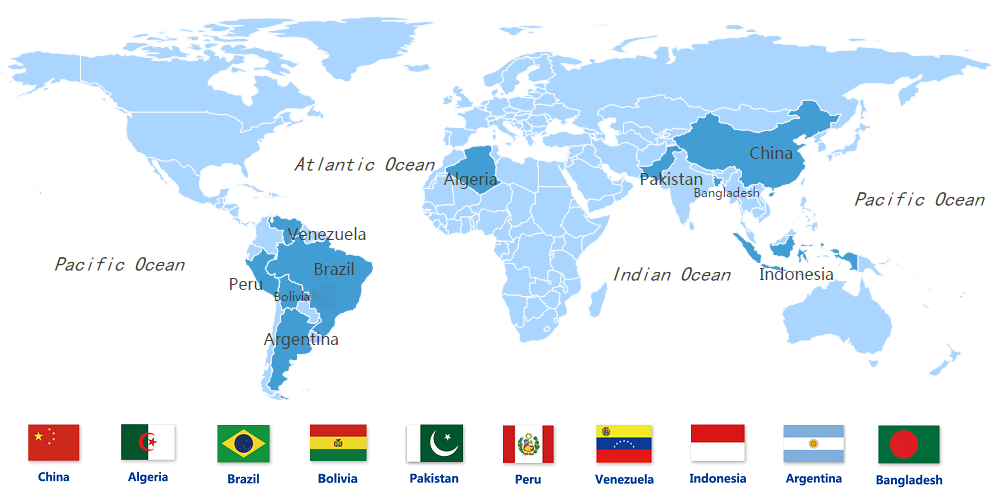
Currently, there are ten member states for UN Regional Centre for Space Science and Technology Education, i.e. Algeria, Argentina, Bangladesh, Bolivia, Brazil, China, Indonesia, Pakistan, Peru, Venezuela. Providing services to the member states is one of the main objectives of the Centre.
The office of the Centre has established a basic database of all members of the Governing Board nominated by member states, and assigned one staff to keep in close contact with the members of the Governing Board (GB)of the Centre. The meeting documents have been sent to all members of GB by E-mail before the first regular meeting and then the feedbacks of the members to the meeting documents were tidied up. The Centre also booked air tickets and accommodation for the members so as to attend the meeting of GB and actively communicated with the members of GB to understand what the members need. The Secretary of GB dispatched the Minutes of the first meeting of GB and information feedback sheets to all members of GB in order to understand the demand of member states in the field of space science and technology education. The Centre will carry out its activities in accordance with the requirements and recommendation of the Chairperson and other members of GB.
In addition, with the support of Chinese government, the Centre will offer a certain amount scholarships for Master’s Degree and Doctoral Degree to the students from the member states each year. The Centre will offer at least three short training programmes on space technology application to the members states each year.
Host Institution
Beihang University

Beihang University is a prestigious higher education institution with a long history. Founded on October 25, 1952 under the name of Beijing Institute of Aeronautics, it originated from the merger of the aeronautical departments of Beijing Institute of Technology, Tsinghua University, and Sichuan University. In 1988, it was renamed Beijing University of Aeronautics and Astronautics (BUAA). In 2002, the university changed its English name to Beihang University.
As the first institution of higher education in aeronautics and astronautics established after the founding of the People’s Republic of China in 1949, Beihang University has always inherited its revolutionary origins, taking serving the nation as its highest pursuit. It is dedicated to nurturing top-notch talent, building advanced equipment, and continuously forging ahead at the forefront of China’s higher education. A total of 100 academicians of the Chinese Academy of Sciences and Chinese Academy of Engineering, along with over 270,000 outstanding contributors, have emerged from here. They have showcased the spirit of "Integrating Virtue with Brilliance and Combining Knowledge with Practice," and filled numerous domestic gaps by successfully developing and launching various types of aircraft.
Beihang University is currently under the administration of the Ministry of Industry and Information Technology. It has Xueyuan Road campus and Shahe campus in Beijing, as well as a newly-opened International Campus in Hangzhou, with the total area reaching approximately 4,000 mu. Since its establishment, Beihang University has always been an important institution in China. It was one of the first 16 key universities in the country and one of the first 22 universities to establish a graduate school after the restoration of the degree system in the 1980s. In 1995, it was enrolled into the "211 Project," and in 2001, it became part of the "985 Project." In 2017, it was selected to build a national "Double First-Class" university. The 16th Party Congress of the university set forth the vision of building a world-class university rooted in China.
Beihang University will provide the New Centre with the necessary working space, facilities and personnel.
For more information about Beihang, please view from the website: http://www.ev.buaa.edu.cn/
