From November 3 to 7, 2025, the Executive Short Course on Space Project Management, organized by the United Nations Office for Outer Space Affairs (UNOOSA) and hosted by the Regional Centre for Space Science and Technology Education in Asia and the Pacific (China) (Affiliated to the United Nations) (RCSSTEAP), successfully concluded at the Beihang Hangzhou International Campus.
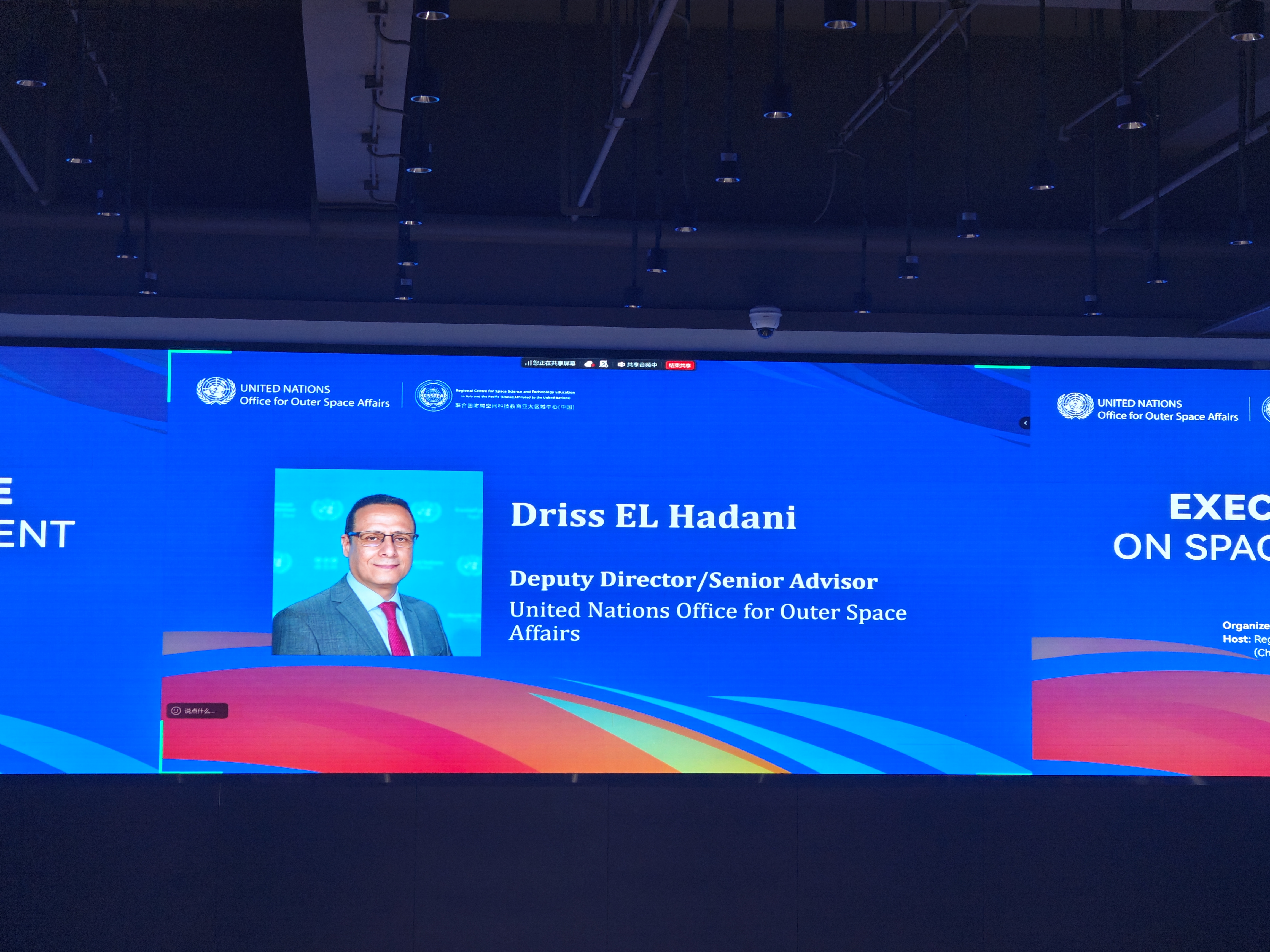
The opening ceremony was held on the afternoon of November 3. It was chaired by Prof. Gongling Sun, Principal Scientist of RCSSTEAP, with opening remarks delivered by Dr. Driss El Hadani, Deputy Director of UNOOSA, and Prof. Guifei Jing, Deputy Director of RCSSTEAP.
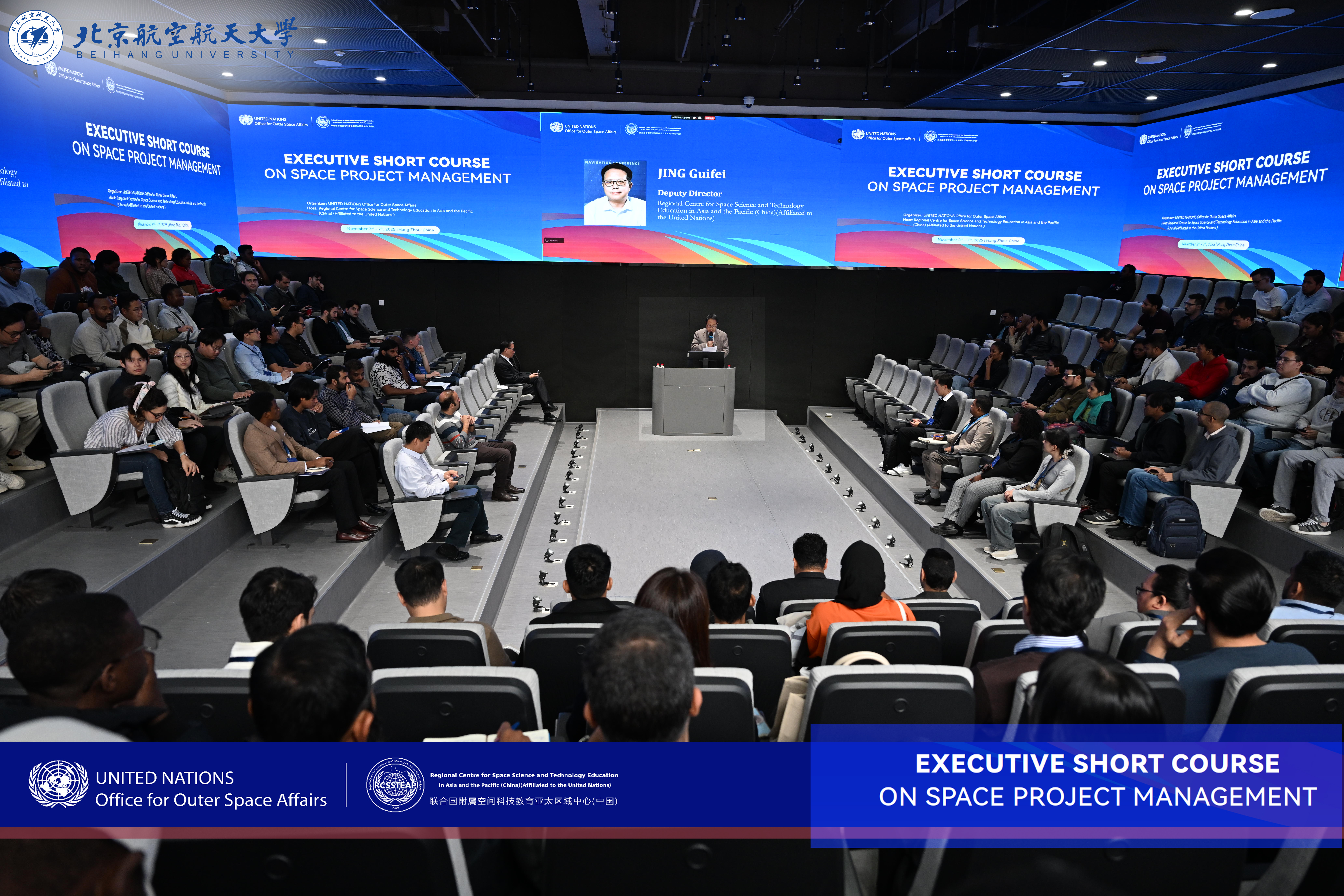
In his speech, Dr. El Hadani highlighted that space project management has become a key driver of international cooperation and sustainable development. He expressed his hope that the course would enhance the capacity of young scientists and professionals worldwide in project planning and implementation.
On behalf of the organizing institution, Prof. Jing first extended his warm welcome to all participants. He then emphasized the commitment of Beihang University and RCSSTEAP to promoting education, research, and international cooperation in space programs and to contributing China's expertise and resources to the sustainable development of the global space sector.
The five-day course provided a systematic exploration of the entire lifecycle of space projects, covering topics such as project planning and budgeting, systems engineering, cost control, risk management, and the application of artificial intelligence in space missions. Through a combination of lectures, case studies, and hands-on exercises, the course helped participants gain a comprehensive understanding of the principles and best practices in space project management.
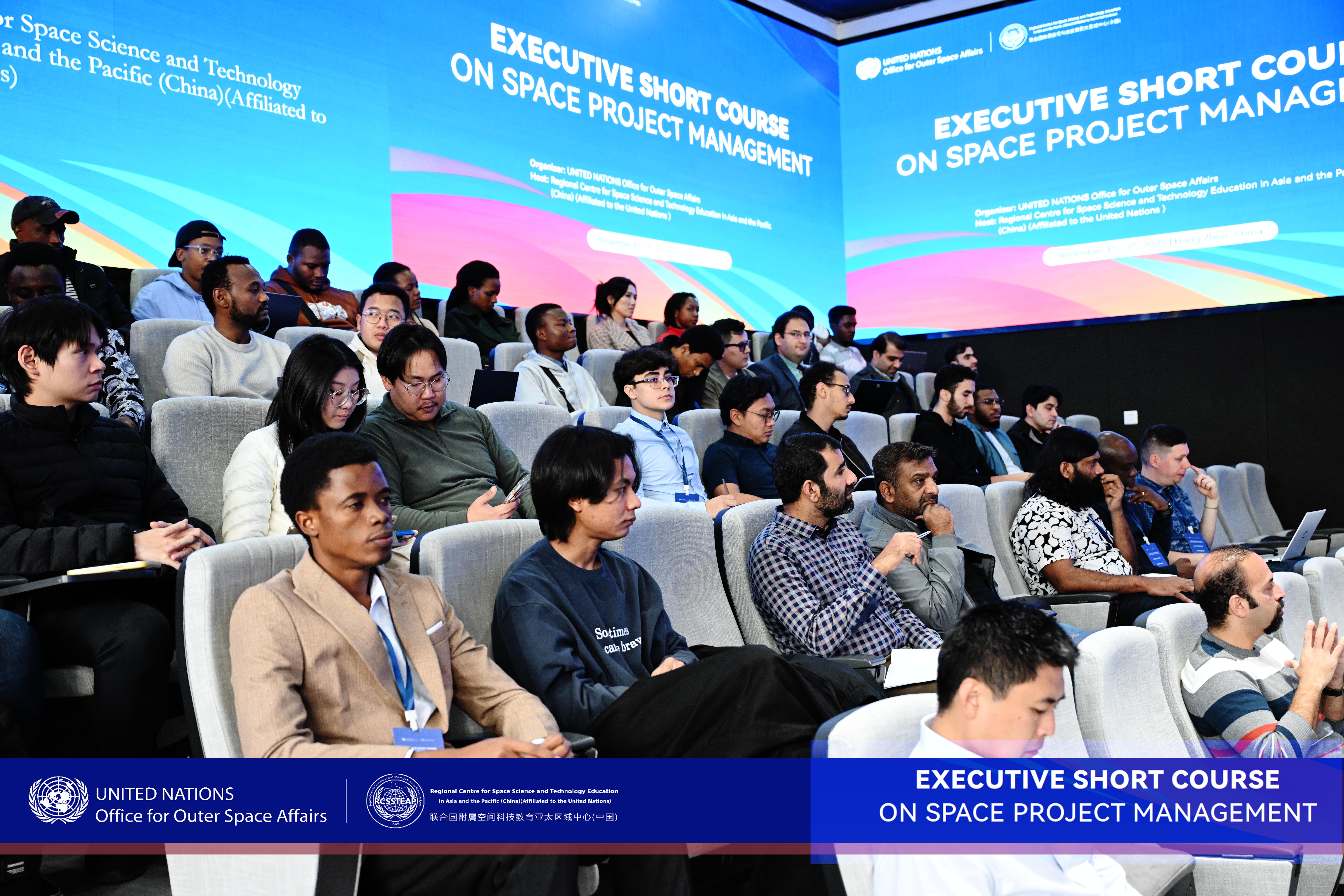
The course featured a distinguished panel of lecturers from multiple countries and institutions, including Dr. Driss El Hadani (UNOOSA), Prof. Guifei Jing (RCSSTEAP), Prof. Gongling Sun (RCSSTEAP), Dr. Farid Gamgami (Shanghai Engineering Center for Microsatellites), Prof. Hai Huang (RCSSTEAP), Prof. Xiaozhou Yu (Dalian University of Technology), Mr. Naser Alrashedi (UAE Space Agency), Dr. Haitham Akah (Egyptian Space Agency), and Dr. Mohammed Ibrahim (Egyptian Space Agency).
This approach integrated theory with practice, enabling participants to apply project management concepts in realistic, scenario-based environments. The course also provided a platform for participants from various nations and regions to exchange ideas, thereby deepening mutual trust and cooperation in space education, scientific research, and the sharing of project management experiences.
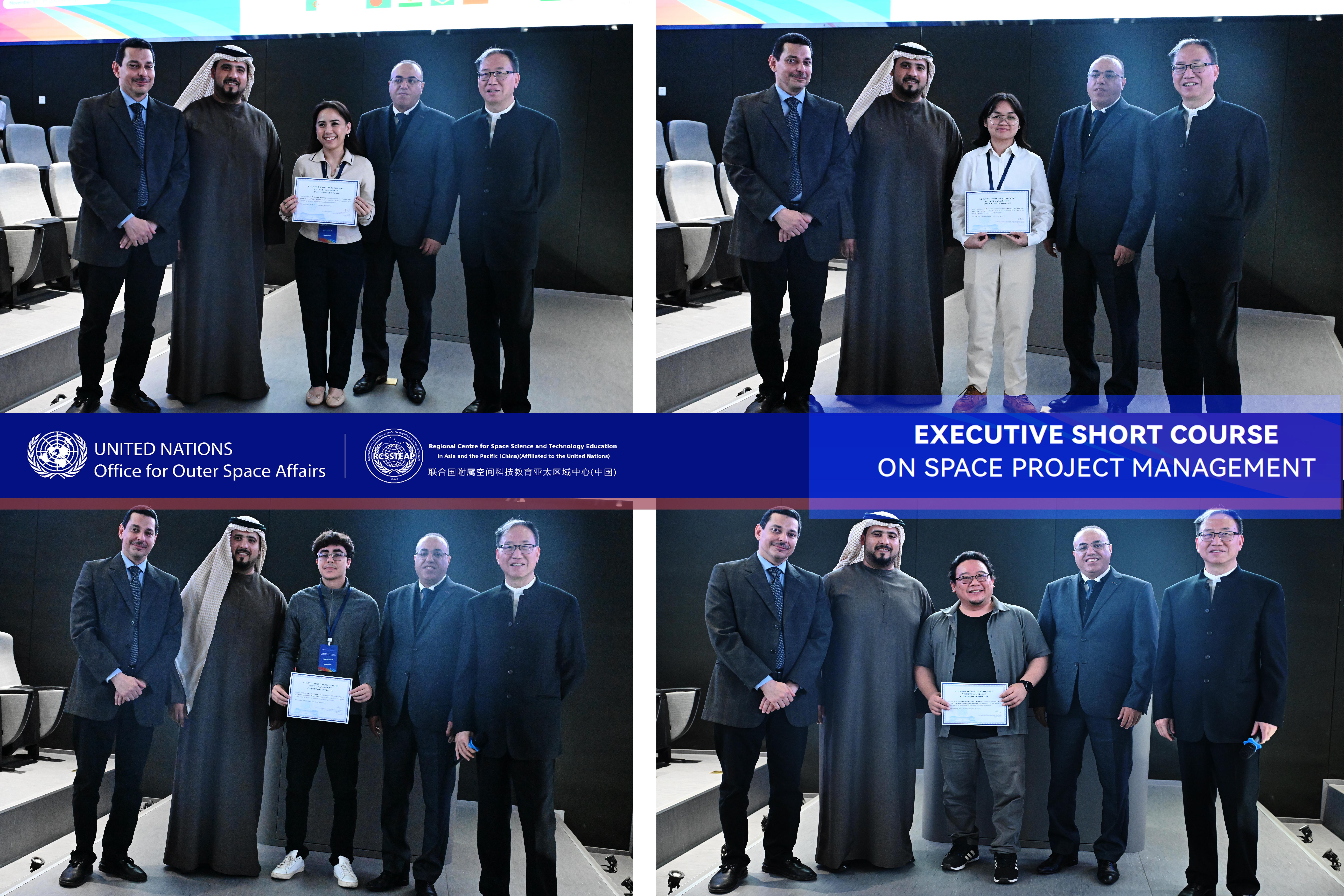
This course marks an important achievement within the framework of the cooperation between UNOOSA and RCSSTEAP, reflecting the UN’s continued commitment to promoting inclusive space technology education and strengthening capacity building for developing countries. It equipped young professionals from Asia, Africa, and Latin America with systematic knowledge of space project management, thereby enhancing their abilities in satellite engineering, mission organization, and international space project implementation.
As highlighted by Dr. El Hadani in his concluding remarks, RCSSTEAP’s training programs have become a vital platform for developing nations to share knowledge in space science and technology, contributing to both technology transfer and capacity building. He was also pleased to note that this course fostered closer cooperation among countries in satellite development, data sharing, remote sensing applications, and project management systems, paving the way for sustainable international cooperation.
In addition, the course fostered discussions on practical cooperation between RCSSTEAP and international enterprises and academic institutions. Several participant organizations expressed interest in partnering with enterprises from China and the Asia-Pacific region on Earth observation, space data processing, and industrial applications. This demonstrated the tangible value of international training courses in promoting innovation and economic cooperation in the space sector.