From January 27 to 30, 2026, the Regional Workshop on Microsatellite Technology was successfully held at the Virtual University of Côte d'Ivoire (UVCI). Co-organized by the Regional Centre for Space Science and Technology Education in Asia and the Pacific (China) (RCSSTEAP) and the UN-affiliated Regional Center for Space Science and Technology Education in French (CRASTE-LF), the event aimed to deepen Sino-African space cooperation and strengthen indigenous capacities in microsatellites and Earth observation.
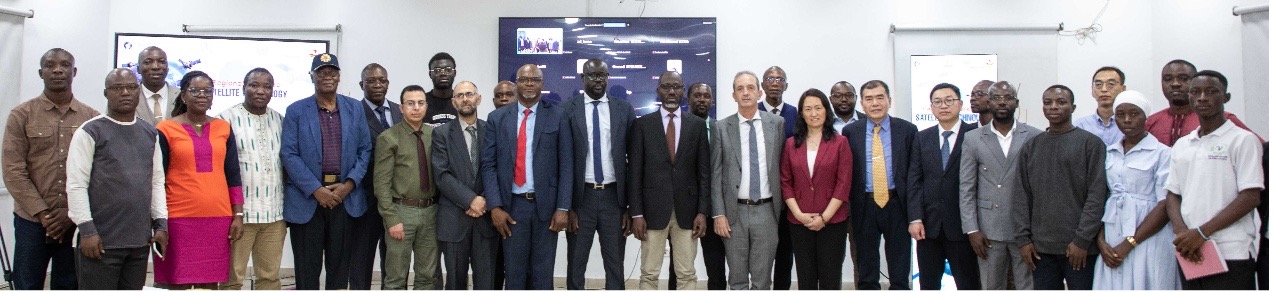
During the opening ceremony, Prof. Arsène Kobéa, representing the Minister of Higher Education and Scientific Research, and Prof. Koné Tiémoman, President of UVCI, highlighted the workshop as a pivotal step in implementing the national space strategy and supporting the Ivorian Space Agency. Prof. Emran Anas, Director of CRASTE-LF, emphasized the strategic importance of microsatellites for Africa's autonomous development, while Prof. Kouamé Fernand, Vice-President of UVCI, outlined the university's vision for international cooperation in geospatial sciences.
As a key supporter of the event, Associate Prof. Wan Xiaowei spoke on behalf of RCSSTEAP. He presented the Centre as a UN-affiliated institution dedicated to promoting the peaceful use of space science and technology through training and capacity building. He highlighted its academic offerings, structured around master's and doctoral programs, and emphasized the importance placed on "hands-on training"—particularly through the development, launch, and operation of microsatellites leveraging Beihang University's advanced infrastructure.
In a keynote address, Prof. Huang Hai, also from RCSSTEAP, detailed the "APSCO Student Small Satellite Project" and the SSS-1 microsatellite, demonstrating the value of low-cost technological innovation in higher education.
The workshop served as a hub for Pan-African dialogue. Experts from Morocco, Senegal, Cameroon, and Côte d'Ivoire shared experiences in nanosatellite engineering and national space planning. During the subsequent three-day technical training session, Chinese experts provided systematic instruction to 39 trainees (both online and in-person) on core subjects such as satellite systems engineering, thermal control, and space propulsion.
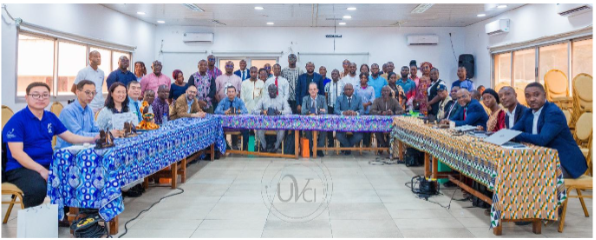
The workshop concluded with a consensus to strengthen strategic collaboration between UVCI, Beihang University, and RCSSTEAP, and to deepen South-South cooperation. The success of this event marks a new milestone in Sino-African space education cooperation, injecting fresh momentum into the sustainable development of Africa's space capabilities.